

You are probably familiar with this scenario from everyday work: an experienced engineer retires, taking decades of undocumented product knowledge with them. At the same time, the position remains unfilled for months. Meanwhile, young talents applying for the job expect modern work tools and a high degree of flexibility. The key challenges our customers face in engineering are skills shortages, employee turnover, and a lack of young talent. Digital transformation is a crucial step towards overcoming these challenges and ensuring long-term competitiveness. But technology alone is not enough:
“The introduction of new technologies is only the first step. What really matters is the ability to align technological innovation with human needs and the demands of a dynamic work environment.”
This is exactly where we at CONTACT Research come in. To actively address these challenges, we are exploring the trends shaping New Work. As a global megatrend, New Work is already influencing your teams on a daily basis. Since we develop the software your employees use every day, we need to understand the new demands New Work places on PLM systems.
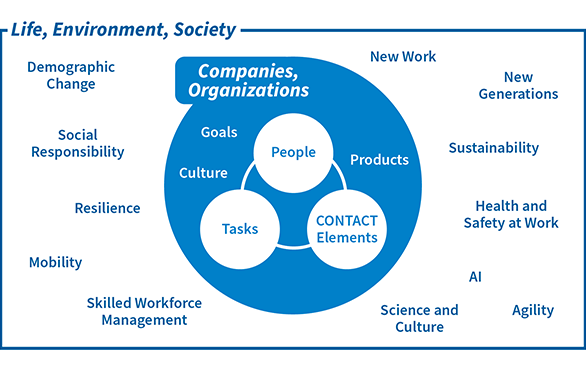
Society is changing the world of work
Behind the shortage of skilled workers and the changing nature of work lie profound societal developments:
Demographic Change & Knowledge Loss: An aging workforce requires significant investment in occupational health, ergonomics and continuous training and reskilling. At the same time, growing competition for skilled workers is driving up recruitment and retention costs. As the baby boomer generation retires, the available workforce is also shrinking considerably. This puts valuable expertise, often undocumented and based on years of experience, at risk of being lost forever.
The Expectations of New Generations (Gen Z & Digital Natives): These generations expect flexibility, flat hierarchies, and psychological safety. For them, work is about more than simply earning a living; it needs to provide a sense of purpose. As a demographic shift, these digitally savvy generations are essential to securing the skilled workforce of the future. Companies therefore need to align their employer value proposition with the values and expectations of these potential employees.
Structural Gender Inequalities & Diversity: Unequal treatment based on gender in the labor market is not simply a matter of personal preferences. It is rooted in deeply ingrained structural barriers. This is particularly evident in STEM fields, where the term “leaky pipeline” describes how qualified women disproportionately leave technical professions as their careers progress. Factors such as the systemic gender pay gap, unpaid care work, and difficulties balancing family and career prevent companies from tapping into this valuable talent pool. By actively breaking down these barriers, companies can attract and retain key talent amid skills shortages while also demonstrably strengthening their own capacity for innovation.
Holistic Health & Resilience: Today, health is viewed holistically. Mental resilience and healthy integration of work and personal life are essential to employees. Excessive workloads and monotonous work environments reduce motivation and increase absenteeism.
How can New Work address these challenges?
The practical measures can be grouped into four key areas:
Work Models: Establishing hybrid, remote-capable structures and using modern communication technologies enable the flexible integration of global teams. Flexible working hours and locations, such as flexitime and working from home, as well as project-based work, help attract new talent and retain experienced professionals in the long term while maintaining their productivity.
Shared Values & Culture: An active cultural shift is driven primarily by leaders who set an example by fostering an open culture of feedback and acceptance of mistakes . Leadership is based on mutual respect and trust, with empowerment taking precedence over control. Diversity also acts as a driver of innovation, while a clearly defined corporate purpose strengthens employees’ sense of identification with the company.
Knowledge Culture: Digital skills needed for the future are systematically developed through innovative and creative learning formats. To break down information silos, business-critical knowledge is captured and structured on digital knowledge platforms. Agile microlearning formats also make continuous learning an integral part of everyday work.
Well-being & Working Environment: Preventive occupational health management lays the foundation for a healthy organization. Varied tasks that offer opportunities for development, consideration of employees’ individual life stages and a culture of appreciation all help strengthen their mental and physical resilience.
How CONTACT Elements can support New Work
Let’s be honest: No, CONTACT Elements cannot change your corporate culture on its own. Only you and your teams can do that. However, software that employees use for many hours every day can play a significant role in helping you tailor work tasks, workflows, and organizational structures to their individual needs.
That is why we at CONTACT Research are exploring practical concepts and developing demonstrators in the following areas:
Efficiency & resilience in engineering: When software makes it easy for employees to share personal feedback on their work environment, it can boost motivation and help optimize processes.
Increasing efficiency in the product development process: Designing tasks in software around people’s needs can make a tangible difference in employee satisfaction in everyday work.
Maintaining quality throughout projects: Software that allows work to be organized with individual needs in mind helps strengthen employee engagement.
Resilience on the shop floor: Flexible, workforce scheduling tailored to individual needs helps conserve resources and promotes the physical and mental well-being of your teams.
CONTACT Elements new work is an internal research project by CONTACT Research. Do you have questions, ideas, or even a healthy dose of skepticism? We’d love to hear from you! Get in touch and let’s work together to shape the future of PLM and create more sustainable, people-centered work environments.