

Artificial Intelligence (AI) is already an integral part of modern engineering. Especially when you‘re dealing with the development of complex machinery and its major challenges. For example, long product lifecycles, safety, compliance, and service traceability, decades of legacy product knowledge and multi-discipline engineering (mechanical, electrical, software, controls). In these areas, AI can help to reduce complexity, and thus, increase development speed and time-to-market.
Tools like ChatGPT and GitHub Copilot support many areas across a wide range of tasks. While these applications are easy to use, successful AI engineering is far more complex. This is due to intricate processes as well as a frequent lack of data quality, quantity, and infrastructure.
Here, PLM systems come into play.
PLM software not only provides a platform for managing product data. It’s an important interface for implementing AI-powered technologies across various engineering phases.
How to implement industrial AI in engineering?
Model training and data provisioning remain key hurdles for successful industrial AI.
Ready-to-use AI applications like ChatGPT and DALL-E are available for general purposes, such as text processing or image generation. However, there is a lack of instantly usable applications or models for complex industrial issues. Publicly available datasets rarely meet specific industrial requirements. As a result, you need to fine-tune AI models and build company-specific datasets and custom models.
In addition, deploying AI models in industrial environments presents further complexities. This includes
- the integration with existing systems,
- access security and authorization when managing the underlying data as well as
- ensuring reliability and performance.
PLM systems provide the infrastructure to collect, structure, and process data. They facilitate AI model integration into existing processes and offer a central platform for managing AI solutions throughout the entire product lifecycle. This includes ensuring data quality, version control, and managing the generated outputs.
By connecting AI tools and PLM systems, your company ensures a consistently structured use of data. Thus, you built the foundation for successful AI applications.
A second major challenge lies in the complexity of AI implementation itself. This ranges from the selection of suitable models and algorithms to the adaptation of these models to the specific requirements of your company. To make AI engineering work, IT, engineering, and data science must collaborate closely. PLM systems facilitate this by providing a unified platform that bridges these disciplines and drives teamwork.
PLM systems as enablers for AI
PLM systems with deep integration capabilities create the necessary conditions for incorporating AI into existing development processes. As central data hubs, they enable access to data from various sources in the product lifecycle.
By providing a consolidated data foundation, PLM systems clear the path for generative AI (GenAI) technologies. These advanced solutions independently generate fresh, creative content, from text to images, offering companies unprecedented opportunities, particularly within design and product development.
By facilitating the integration of AI-powered design tools, PLM systems ensure efficient management and versioning of AI-generated designs. For instance, AI-powered tools can automatically generate design variants of CAD models. They can also optimize these designs based on simulation results.
Connecting AI solutions to existing data structures is another critical aspect. By integrating AI into PLM systems, AI-powered design tools can be linked directly to your product data. This accelerates the entire development process. This improves component reuse, enhances collaboration between teams, and continuously optimizes product development.
Furthermore, PLM systems capture AI-generated insights and optimizations in a central repository, making them available for future use. As a result, you can significantly increase your capacity to innovate.
AI-based applications in engineering
The interaction between GenAI and PLM systems enables the integration of AI-driven design processes into existing workflows. This unlocks a wide range of applications:
Automated design variants
AI creates new design variations based on existing CAD data and optimizes them for parameters such as cost, material usage, or production options. This gives your engineers more time for creative design tasks.
Simulation-driven optimization
The synergy between simulation tools and GenAI algorithms enables a continuous feedback loop, allowing design concepts to be iteratively refined and optimized. This helps you to identify the best design choices based on comprehensive data analysis. It reduces the number of physical prototypes and saves both time and costs.
Optimized product development
AI dynamically adjusts designs to new requirements during the ongoing development process. In connection with the PLM system, your company can react faster to changes and adapt product development without delays. This offers significant benefits, especially for mechanical and plant engineering.
Time-series forecasting
GenAI analyzes time-series data to predict future developments. By leveraging historical and operational data, PLM systems combined with AI help you to identify trends at an early stage and make informed decisions.
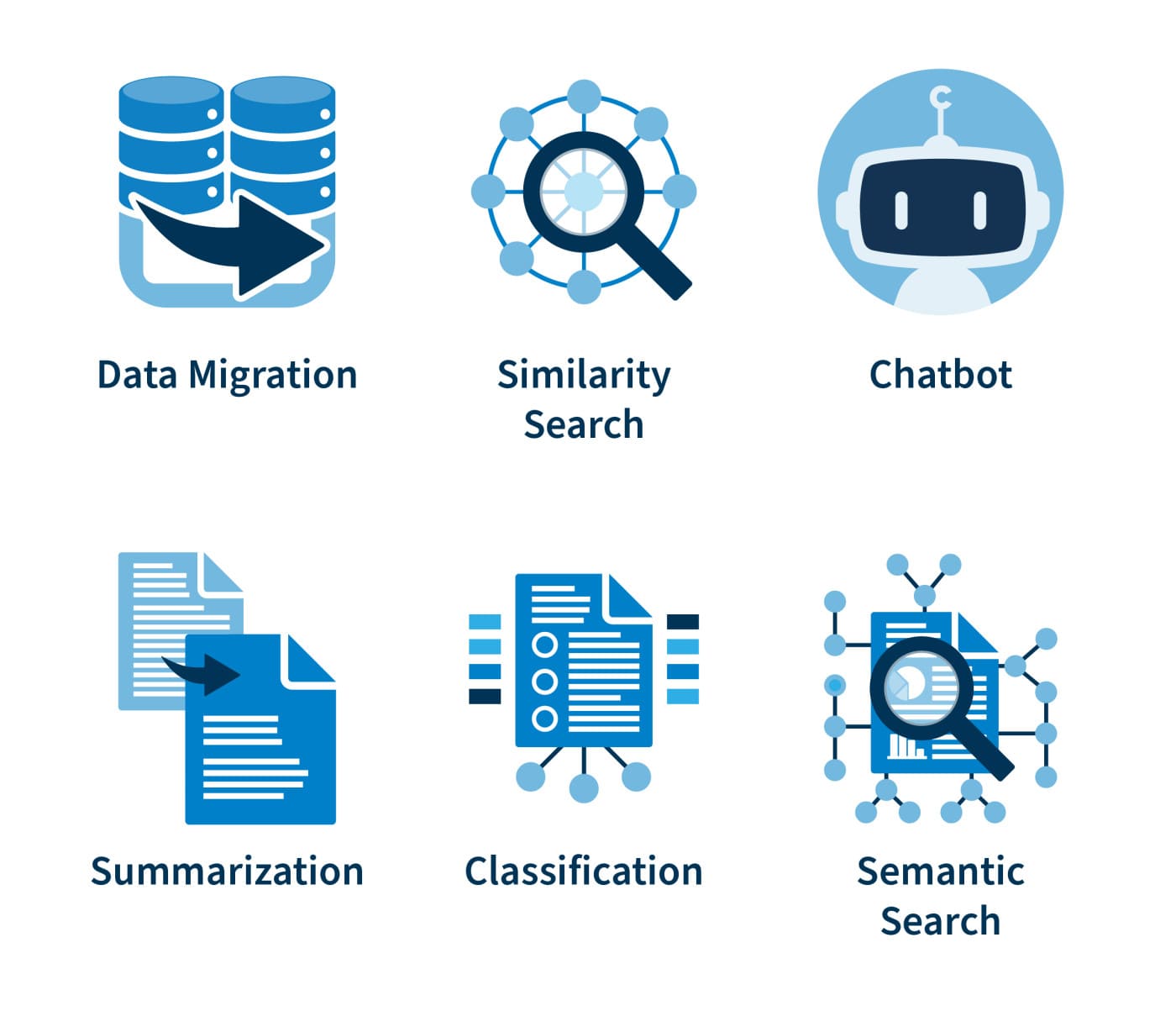
Data management and deployment
Integrating AI into industrial engineering is not only a technical challenge but also an organizational one.
Successful AI deployment requires suitable data management. PLM systems provide a platform to manage data in a structured manner – from collection and storage to provision for AI models. Data protection, security, and availability must be guaranteed.
In addition to data processing, AI deployment – the availability in the production environment – is also crucial. To integrate AI, your IT and engineering teams must work together. PLM systems make this process secure and efficient, while ensuring employees can easily use AI in their daily work.
Therefore, PLM systems must support the development and integration of AI models as well as ensure their operation and maintenance in day-to-day business.
PLM systems also serve as a platform to monitor, update, and improve AI models. By using operational data, these models can easily adapt to changes, ensuring consistently high product quality.
Trends and perspectives
PLM systems will increasingly serve as central platforms for managing and integrating AI solutions. AI-powered automation will become more prevalent, as the ability to learn from data and recognize complex relationships is constantly improving.
Another trend is the growing integration of AI in collaboration across different departments and companies. PLM systems will develop into platforms that support both internal processes and seamless cooperation across company boundaries. This leads to more efficient supply chains and accelerated innovation. Additionally, explainable and transparent AI models are becoming increasingly important to strengthen trust in AI and increase acceptance in safety-critical areas of engineering.
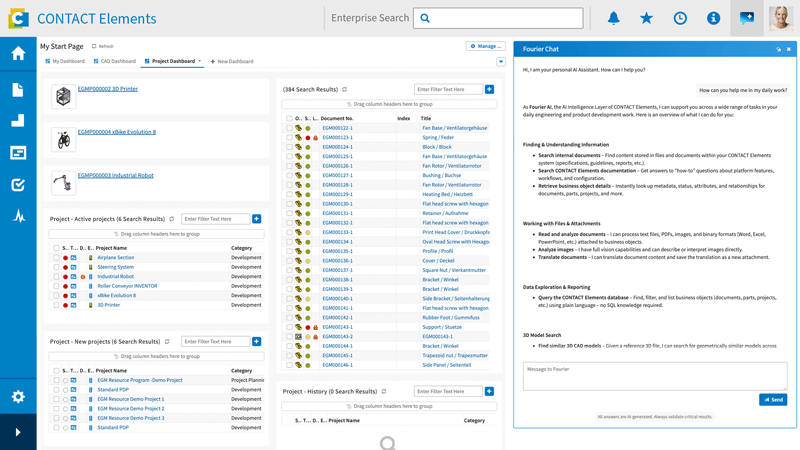
Success factors for AI in engineering
Data availability and quality
High-quality data and its availability form the basis for the success of AI applications. PLM systems ensure that the required data is available in the appropriate quality through consistent data collection and management. This allows models to train on a solid database and deliver precise and reliable results.
Seamless process integration
To exploit the full added value of AI technologies, you must integrate them into existing workflows. PLM systems integrate AI-powered applications into existing processes and simplify their use. As a result, AI solutions can be implemented into existing systems without major adjustments and put into operation more quickly to deliver relevant results immediately.
Training and change management
Companies must prepare their employees specifically for the use of the new tools by providing technical training and conveying an understanding of their use in the respective work context. Well-planned change management promotes acceptance and actively involves all employees in the change process.
Management support
Support from management is crucial for the successful introduction of AI in engineering. Communicating clear goals and strategies for the AI transformation is just as important as providing the necessary resources. Meanwhile, management must foster a culture of change.
Conclusion
The integration of AI is revolutionizing engineering. PLM systems play a key role as the central hub for data. They create the necessary infrastructure to integrate AI applications into existing processes and use them efficiently. This enables you to optimize your product development processes and exploit the full potential of AI.
The path to success lies in the sensible use of data, the integration of AI models into the existing IT landscape, and the involvement of employees. Only those who tackle these challenges in a targeted manner will be able to shape the AI transformation in engineering sustainably.
A strategic approach is key. Companies should focus equally on technology and people. This is how they sustainably unlock the full potential of artificial intelligence in engineering.
Webcast: Accelerate complex machinery development
Ready for real results? If your team’s AI projects are still struggling with messy data or adding unwanted complexity to your product development, it’s time for a reality check. Watch our Industry Talk to discover what it takes to make AI deliver reliable value for your engineering team.
What you will learn:
The Pitfalls: Why most AI initiatives fall short in complex product data environments.
The Foundation: The non-negotiable foundation needed to deliver truly reliable AI insights.
The Integration: Practical strategies to seamlessly embed AI within your existing engineering workflow.