

A new order from the OEM comes in. But no one knows exactly which drawing in the PDM system is currently valid. Product development wants to introduce an AI application, but the required data is neither complete nor consistent. During the audit, proof of a change is missing, even though the measure was implemented weeks ago.
Situations like these are an everyday reality in many small and mid-sized enterprises. Often, these are merely symptoms whose cause lies deeper: in product data management (PDM). The importance of PDM systems for digital transformation is frequently underestimated, even though they form the foundation for many technologies and processes. This becomes clear when looking at three key goals of digitalization:
1. Competitive advantages through artificial intelligence
AI applications already support engineering today across all phases of the product lifecycle – whether in design, variant management, or manufacturing. Companies can automate processes across disciplines and departments and make decisions based on data-driven insights. However, implementing industrial AI solutions requires a database and structure on which AI algorithms can be trained.
For the use of AI, powerful and scalable PDM solutions are essential. They centralize and version large volumes of product data, such as CAD models, specifications, manufacturing information, and change documentation. This data is structured, prepared, and enriched with metadata in the PDM system. That creates the necessary quality of training data for AI models. Building on this, AI functions can be integrated as needed – for example, for design optimizations, predictive quality assurance, energy management, or variant configuration.
In the field of AI, the demands on PDM are particularly high. Without a powerful system, it is impossible to ensure the quality, consistency, and accessibility of data for AI. Problems such as inconsistencies, missing or unstructured metadata, and inadequate validation mechanisms result in a flawed and unreliable database for AI algorithms. Under such conditions, investments in AI applications fail to deliver results.
2. Meeting external standards
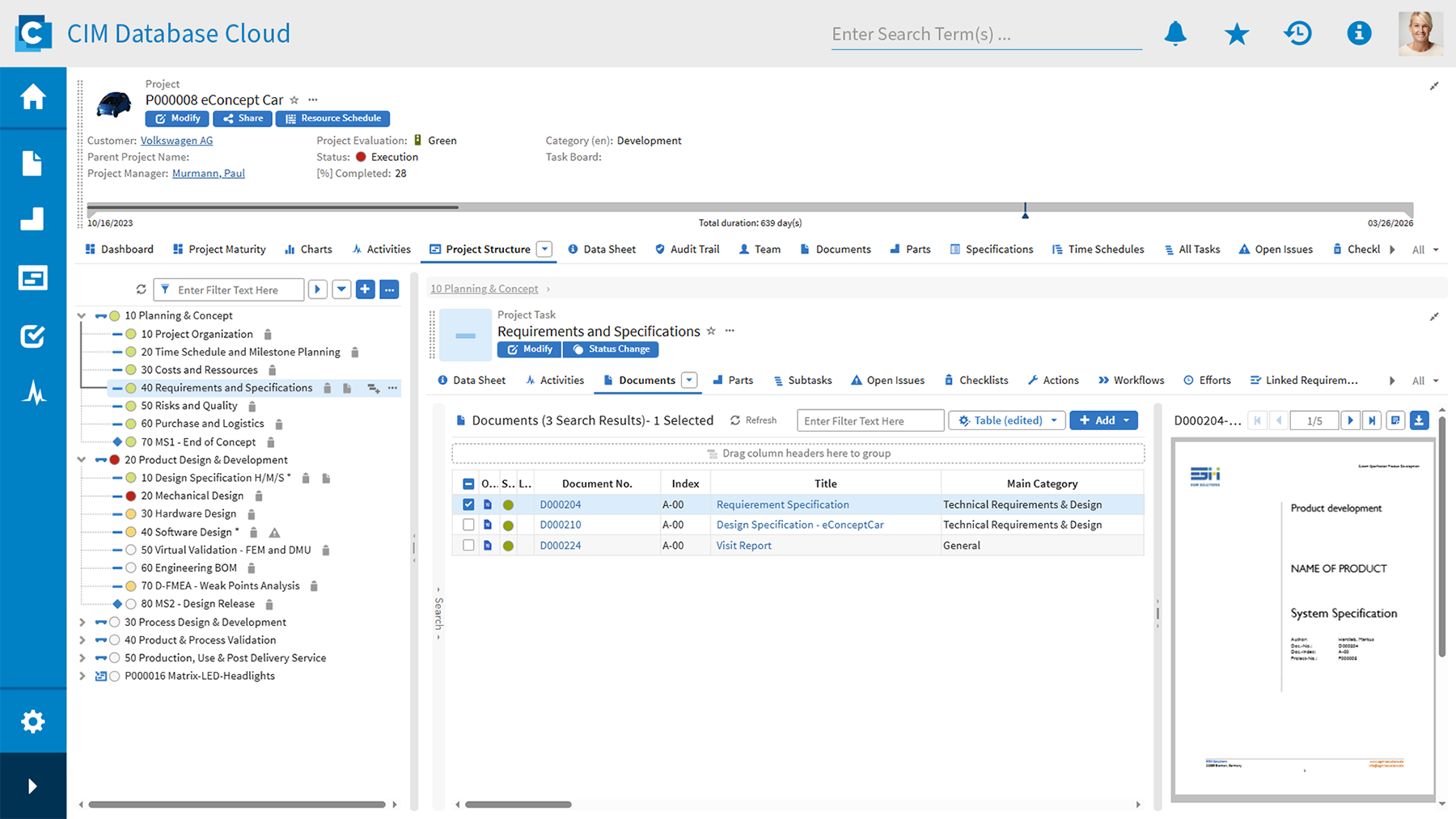
Transparency, consistency, and data integrity are three prerequisites for implementing quality and industry standards. To meet reporting obligations and process requirements, companies must manage all product-related information centrally, versioned, and traceable. This is done in the PDM system, which serves as a single source of truth and provides current, reliable data across organizational boundaries.
How important PDM software is for meeting external requirements is demonstrated by the example of Automotive SPICE (A-SPICE). This internationally recognized standard aims to ensure the quality and safety of electronics and software in vehicles. A-SPICE is designed to enable suppliers to develop safe, error-free software that can be integrated into other vehicle systems. At its core, it is about qualifying suppliers and avoiding risks during development.
The requirements of A-SPICE are particularly challenging for SMEs. Here again, effective product data management is crucial. PDM systems provide a framework that ensures the structure, control, and quality of work results required by A-SPICE throughout the entire development lifecycle. This is supported by functions for centralized data storage and availability, as well as version, change, and configuration management.
Currently, A-SPICE is not mandatory. Nevertheless, many automotive manufacturers use the framework to assess the process competence of their suppliers. Companies that fail to meet the standard risk losing customers.
It is foreseeable that A-SPICE will become a knockout criterion for OEMs. Companies that do not meet the standard will be excluded from the supply chain. This risk also exists with other regulations if product data management is inadequate. Therefore, companies must invest in their PDM.
3. Ensuring IT security
PDM is primarily seen as an administrative task. In product development, however, it is also a key focus of IT security. PDM systems are responsible for managing critical intellectual property – the product data itself. Protecting this sensitive information (CAD models, bills of materials, technical specifications, test results, customer information, etc.) is directly linked to the functions of the PDM system.
Unauthorized access, theft, manipulation, or data loss can be effectively prevented with PDM systems based on highly available architectures. Important modern features include:
- Access control and authorization (roles and rights),
- Robust encryption,
- Multi-factor authentication,
- Version control and change management,
- Implementation of backup and recovery strategies, for example in the event of a cyberattack,
- Audit trails and histories of data access and changes (for traceability in the event of security incidents), and
- Risk management and compliance.
PDM systems should have no gaps in these areas. Otherwise, they become a security risk. A warning sign is when the software is based on outdated architectures or the vendor discontinues security updates and support. In such cases, companies are forced to isolate the tool in operation, which inevitably creates IT risks and inefficiencies.
Responsibility for data protection and cybersecurity is increasing in almost all industries. While some requirements primarily affect OEMs and tier-1 suppliers, these companies pass verification obligations and security requirements on to their suppliers and partners. As a result, smaller companies must also be able to collect, consolidate, and protect data using appropriate IT solutions.
More about PDM systems
Managing product data is a key focus point in digitalization. Whether standards are met, information is protected, and technologies such as AI have a chance depends on the performance of the PDM solution.
As of today, however, PDM software in many companies is a hidden cost driver. Older, slow, functionally limited systems are often in use, and they offer neither web nor cloud services. Such tools hinder coordination between departments and are a source of errors that can jeopardize entire projects.
Read how to solve this problem in our guide “When the PDM System Becomes a Risk.”